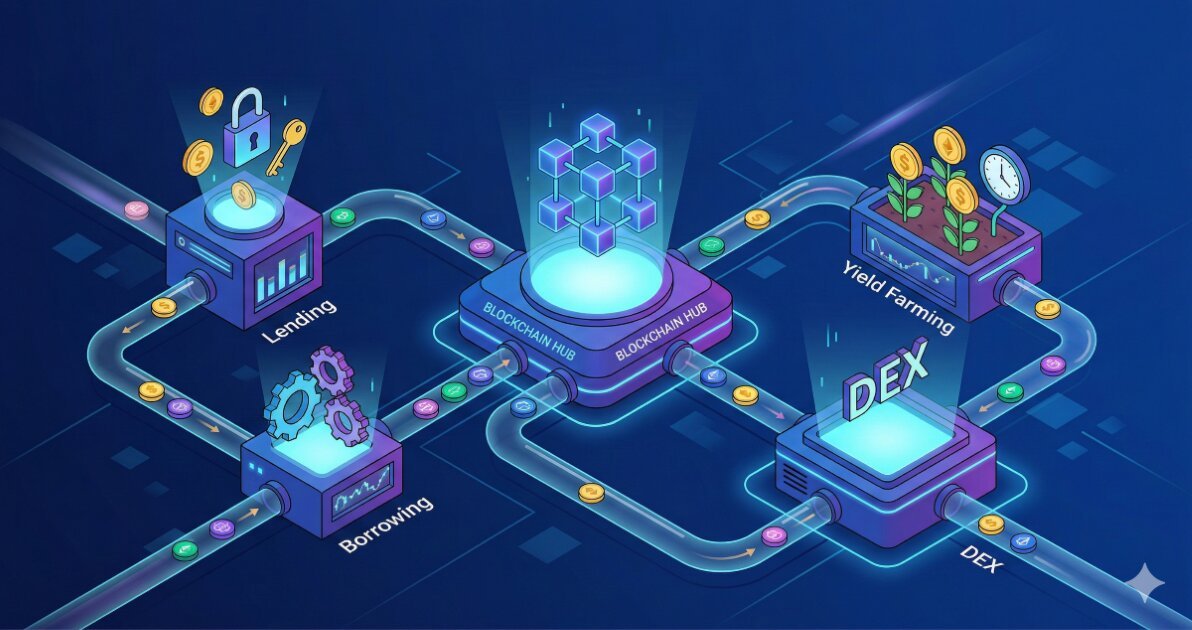
Evaluating Crypto Trading Platforms: Architecture, Custody Models, and Execution Trade-offs
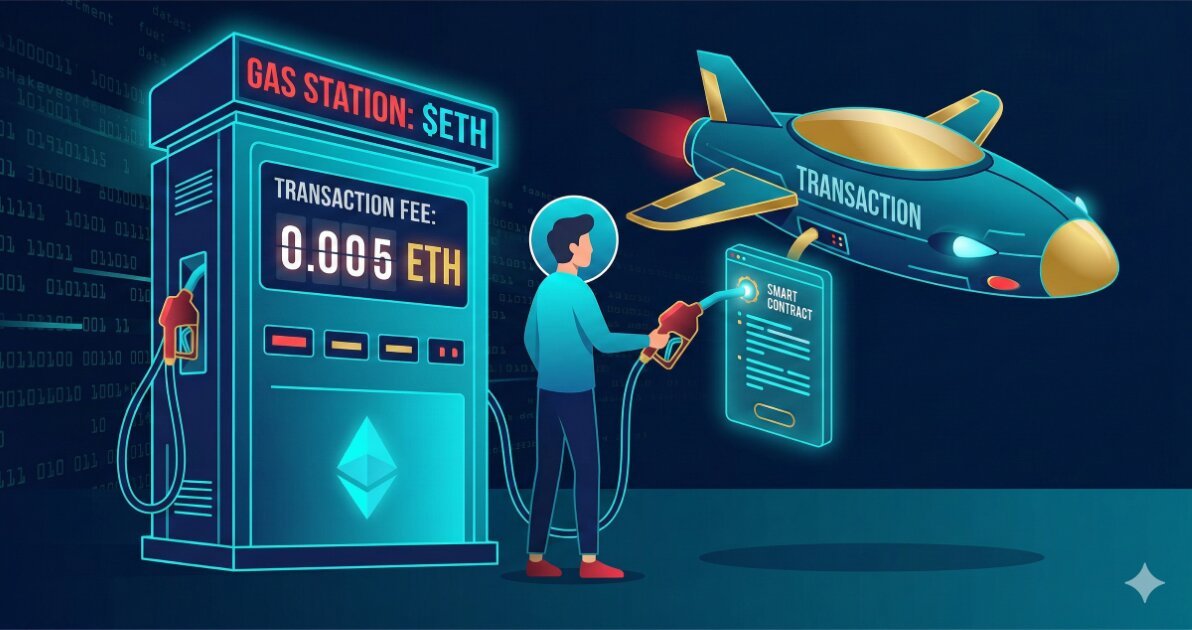
Choosing a trading platform means selecting a custody model, an execution engine, a fee schedule, and a regulatory relationship. The differences matter: a centralized exchange (CEX) custodies your assets and executes trades in an internal order book, while a decentralized exchange (DEX) aggregator routes swaps through onchain liquidity pools you interact with directly. This article breaks down the technical and structural dimensions that separate platforms, so you can match infrastructure to your execution needs, custody preferences, and jurisdictional constraints.
Custody and Key Management Models
Centralized platforms hold customer deposits in omnibus wallets. You trade against internal ledger balances. The exchange controls private keys, signs withdrawals on your behalf, and manages hot/cold wallet allocation. This architecture enables sub-millisecond order matching and instant settlement of trades within the platform, but concentrates counterparty risk. Platform insolvency, regulatory seizure, or operational failure can freeze or eliminate your positions.
Noncustodial platforms (DEXs, DEX aggregators, and self-hosted trading interfaces) never take possession of your assets. You sign every swap or limit order with your own wallet. Execution happens onchain or through smart contract settlement. The platform cannot block withdrawals because there are no deposits. You bear responsibility for key security, transaction signing, and gas management. Recovery depends entirely on your backup procedures.
Hybrid models exist. Some platforms offer custodial accounts for fiat onramps and instant liquidity, plus noncustodial vault integrations for users who prefer self-custody between trades. Account abstraction and smart contract wallets blur this boundary further by letting you delegate transaction permissions to session keys or recovery modules while retaining ultimate key control.
Order Execution and Liquidity Routing
Centralized order books aggregate limit orders from all users into a single matching engine. Execution is deterministic: your market order fills against the best available limit orders at that instant, and the platform displays pre-trade depth. Latency typically ranges from single-digit milliseconds to low hundreds of milliseconds depending on API tier and server location. Maker-taker fee schedules reward liquidity providers and charge liquidity takers.
Automated market makers (AMMs) price trades algorithmically from pooled liquidity. A constant product formula (or variant) determines the exchange rate as a function of pool reserves. You pay slippage rather than a fixed spread: larger trades move the price more. MEV bots can frontrun your transaction if you broadcast to a public mempool. Private relay services and MEV protection RPCs mitigate but do not eliminate this risk.
DEX aggregators split a single trade across multiple liquidity sources to minimize slippage and gas costs. The router contract queries prices from Uniswap, Curve, Balancer, and others, then constructs a multi-hop path. You specify maximum slippage tolerance, and the transaction reverts if actual execution price falls outside that bound. Gas costs scale with the number of hops and the complexity of each pool’s pricing logic.
Request for quote (RFQ) systems used by some institutional platforms route your order to multiple market makers who compete to fill it. You receive binding quotes with guaranteed pricing for a short validity window (often two to five seconds). This model works well for large size trades where you want price certainty before committing, but requires counterparty whitelisting and sometimes minimum trade notionals.
Fee Structures and Rebate Programs
Maker-taker models charge different fees depending on whether your order adds liquidity (maker) or removes it (taker). Typical retail taker fees range from 0.10% to 0.50% per trade. Maker fees can be zero or even negative (a rebate) on high volume tiers. Tiering depends on 30 day rolling volume or token stake. Each platform publishes a fee schedule that maps volume or stake to basis point charges.
Flat percentage fees simplify billing but ignore order flow economics. Some platforms charge 0.25% on every trade regardless of maker or taker status. This structure benefits takers relative to tiered models but removes the incentive to post resting limit orders.
Gas fees on DEXs are external to the platform. You pay the Ethereum or Layer 2 network directly for transaction inclusion. A Uniswap V3 swap on mainnet might cost $5 to $50 in gas depending on network congestion and pool complexity. Layer 2 platforms reduce this to under $1 in most conditions. Gas auctions mean fees spike unpredictably during periods of high demand.
Spread markup appears on platforms that act as principal rather than agent. The quoted price includes a hidden spread relative to mid-market. This model is common in retail crypto apps that prioritize UX simplicity over execution transparency. Always compare the quoted rate to a spot reference (CoinGecko, CoinMarketCap, or a direct DEX quote) before executing.
Regulatory Licensing and Jurisdictional Constraints
Licensed exchanges register with financial regulators in their operating jurisdictions. U.S. platforms typically hold state money transmitter licenses and may register as broker-dealers or futures commission merchants depending on product mix. EU platforms comply with MiCA or national frameworks. These licenses impose capital requirements, reporting obligations, KYC procedures, and asset segregation rules.
KYC and AML procedures vary by jurisdiction and license type. Expect to submit government ID, proof of address, and potentially source of funds documentation for accounts exceeding certain deposit or withdrawal thresholds. Some platforms tier access: limited KYC for small balances, enhanced KYC for full functionality. Processing times range from minutes to several days.
Offshore or unregulated platforms accept users from restricted jurisdictions but offer no regulatory recourse. If the platform halts withdrawals, you have limited legal options. Smart contract immutability on DEXs provides a different form of assurance: the code executes as written regardless of jurisdiction, but offers no protection against frontend blocks, DNS seizures, or RPC censorship.
Fiat onramps and offramps concentrate regulatory attention. Moving between crypto and traditional banking requires a licensed partner. ACH, wire, SEPA, and card rails all impose limits, fees, and processing delays. Verify whether your bank permits transfers to crypto platforms; some institutions block transactions preemptively.
Worked Example: Routing a Large Stablecoin Swap
You need to swap 500,000 USDC to ETH. On a centralized order book exchange, you check market depth and see $2M of liquidity within 5 bps of mid. You place a market order. The engine fills it against stacked limit orders in 12 milliseconds, applying a 0.15% taker fee. Your average execution price differs from mid by 3 bps due to the walk up the book, and you receive ETH to your platform balance instantly.
On a DEX aggregator, you input the same trade. The router queries Uniswap V3, Curve 3pool, and Balancer weighted pools. It calculates that splitting the trade (60% Curve, 30% Uniswap V3 wide tick, 10% Uniswap V2) yields 0.8% better pricing than a single pool route after accounting for gas. You set 0.5% slippage tolerance and submit the transaction. Gas costs $18 on Arbitrum. The transaction confirms in the next block, and ETH arrives in your wallet.
Comparing the outcomes: the CEX delivered tighter execution (3 bps slippage vs 50 bps tolerance on DEX) and faster confirmation, but required you to deposit funds and trust the platform. The DEX cost more in gas and required you to manage slippage bounds, but kept assets under your control throughout. The choice depends on trade size, urgency, custody preference, and fee sensitivity.
Common Mistakes and Misconfigurations
- Setting slippage tolerance too tight on DEX trades during volatile periods. The transaction reverts, you pay gas anyway, and you miss your execution window. Start with 1% for large cap pairs, higher for smaller or less liquid tokens.
- Ignoring the distinction between quoted APY and realized yield on platforms offering earn or staking products. Quoted rates often assume compounding frequency or token price appreciation that may not materialize. Calculate effective yield based on actual distribution schedules.
- Leaving large balances on centralized platforms for convenience without verifying Proof of Reserves disclosures or insurance terms. Platform insolvency risk increases with balance size and duration of custody.
- Using market orders during low liquidity windows. Check order book depth first or use limit orders to control execution price, especially for tokens with wide spreads.
- Assuming withdrawal availability during all market conditions. Platforms may suspend withdrawals during extreme volatility, network congestion, or operational incidents. Maintain access to at least one alternative liquidity source.
- Neglecting to verify smart contract audit reports and admin key configurations on DEX protocols before committing size. Upgradeable contracts with multisig thresholds below 4-of-7 or similar introduce custody risk similar to centralized platforms.
What to Verify Before Committing Capital
- Current fee schedule and volume tiers. Platforms adjust fee structures periodically. Confirm maker/taker rates and any token-specific markups.
- Withdrawal processing times and limits for your asset and jurisdiction. Fiat withdrawal delays can extend to five business days or more depending on payment rail.
- Proof of Reserves attestations or equivalent transparency reporting. Check publication frequency and auditor credentials. Absence of recent attestation is a yellow flag.
- Smart contract audit history for DEX protocols. Look for audits covering the specific contract version you will interact with, not just earlier versions. Check for unresolved critical or high severity findings.
- Insurance or asset protection terms. Many platforms advertise insurance but exclude certain loss scenarios (private key compromise, market losses, protocol exploits). Read the actual policy terms.
- Supported networks and token standards. Confirm the platform supports the exact chain and token contract you intend to trade. Sending tokens to an unsupported address usually results in permanent loss.
- API rate limits and access tiers if you plan algorithmic trading. Public API tiers often restrict to 10-20 requests per second; higher throughput requires paid plans.
- Regulatory status in your jurisdiction. Verify the platform holds necessary licenses and permits users from your location. Regulatory status can change; recheck periodically.
- Liquidation and margin call procedures if using leverage. Understand exact LTV thresholds, liquidation price calculations, and whether the platform socializes losses.
- Historical uptime and incident disclosure practices. Platforms with poor track records of transparency during outages or exploits rarely improve without structural changes.
Next Steps
- Select two to three platforms that match your custody preference and compare execution quality on a small test trade. Measure realized slippage, total fees including gas, and settlement time.
- Document your operational security model: where you will custody assets between trades, how you will manage API keys or seed phrases, and your procedure for monitoring platform solvency or protocol health.
- Set up price alerts and monitor execution quality over time. Track your effective fee rate (total fees divided by trade volume) monthly to identify when you cross into better volume tiers or when alternative platforms offer better economics.
Category: Crypto Exchanges
Related Stories
How to Evaluate Crypto Ratings and Reviews Without Getting Mislead
Crypto Derivatives: Futures and Options Mechanics for Active Traders