No single exchange serves every use case. The platform that offers competitive futures margins may route spot orders through inferior liquidity, and the custody model that protects retail users can block institutional execution strategies. This article builds a systematic evaluation framework for practitioners who need to match exchange architecture, market structure, and operational constraints to specific trading or custody requirements.
Liquidity Architecture and Order Routing
Order book depth matters more than headline volume. An exchange reporting $10 billion in daily volume may still exhibit 2% slippage on a $50,000 market order if liquidity fragments across trading pairs or concentrates in wash trading. Evaluate exchanges by measuring actual market impact: place test orders across size tiers (e.g., $1k, $10k, $100k equivalent) and compare execution price to midpoint at order time.
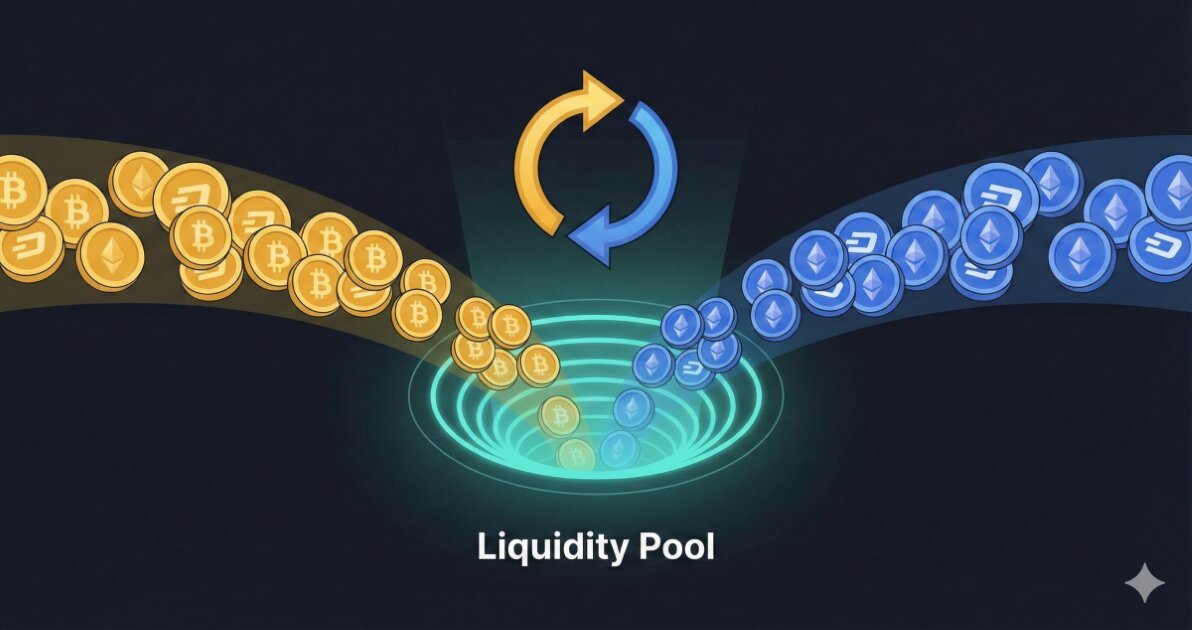
Exchanges implement three primary liquidity models. Pure order book exchanges (Coinbase Pro, Kraken) match limit orders directly. Hybrid models (Binance, OKX) layer algorithmic market makers atop the order book to tighten spreads. Aggregator models (1inch, Matcha for onchain; some institutional prime brokers for offchain) route across venues. For spot trades under $100k, hybrid models typically deliver tighter spreads. For large block trades or illiquid pairs, direct negotiation with OTC desks circumvents public order books entirely.
Check whether the exchange exposes FIX or WebSocket APIs that reveal queue position and order book snapshots with microsecond timestamps. Latency arbitrage opportunities disappear quickly, but practitioners executing size need to confirm their orders interact with real liquidity, not synthetic quotes that evaporate on fill attempts.
Custody and Settlement Models
Centralized exchanges operate as custodians. You deposit assets into exchange controlled wallets, trade against internal ledger balances, and withdraw through manual or automated processes. This model introduces counterparty risk (exchange insolvency, fractional reserves, operational security breaches) but enables instant settlement of trades and access to margin products.
Noncustodial exchanges and DEX aggregators never take possession of assets. Users sign transactions that execute atomic swaps via smart contracts. This eliminates custodial risk but exposes users to smart contract vulnerabilities, frontrunning via mempool observation, and gas price volatility that can make small trades uneconomical.
For custody evaluation, verify:
- Proof of reserves attestation frequency and methodology (Merkle tree commitments, third party audits)
- Cold storage percentage and multisig threshold configuration
- Insurance fund size and coverage scope (some funds only cover futures liquidation cascades, not hack losses)
- Withdrawal processing: automatic under threshold vs manual review, timelock mechanisms, whitelist enforcement
Exchanges that batch withdrawals or impose manual review above modest thresholds (e.g., $10k) signal either liquidity constraints or conservative operational security. Neither is inherently wrong, but practitioners need to match the model to their withdrawal cadence and size requirements.
Fee Structures and Maker Taker Economics
Most exchanges charge tiered fees based on 30 day trailing volume. Maker fees (placing limit orders that add liquidity) typically run lower than taker fees (executing against existing orders). At high volume tiers, maker fees often go negative: the exchange pays rebates to liquidity providers.
A typical tier structure might start at 0.10% taker / 0.08% maker for users under $1M monthly volume and decline to 0.02% taker / negative 0.01% maker above $100M. The exact breakpoints vary significantly. Calculate your effective fee rate by multiplying expected monthly volume by the applicable tier rates, then comparing across exchanges.
Futures and perpetual swap fees follow similar logic but add funding rate payments. Long positions pay shorts (or vice versa) every eight hours based on the spread between perpetual price and spot index. Funding rates averaged 0.01% to 0.10% per period during 2021-2023 bull markets but spiked above 0.30% during volatility events. Exchanges do not control funding rates (they emerge from trader positioning) but differ in index calculation methodology and the smoothness of their liquidation engines.
Regulatory and Jurisdictional Constraints
Exchange licensing and registration status determines available features and user eligibility. Entities registered as money services businesses or licensed under state regimes (BitLicense in New York, various EU MiCA implementations) face capital requirements, transaction reporting mandates, and often must restrict product offerings. Offshore exchanges operating without registration in major jurisdictions can offer higher leverage, more exotic derivatives, and privacy focused account models but expose users to abrupt deplatforming if regulators pressure banking partners or domain registrars.
Verify the exchange’s regulatory status in your jurisdiction before depositing meaningful capital. Some platforms maintain separate legal entities (Binance.com vs Binance.US, Kraken global vs Kraken in specific states) with divergent custody, insurance, and product availability. Cross border deposit and withdrawal often triggers additional KYC review or payment rail restrictions.
Worked Example: Execution Strategy for $250k USDC to ETH Conversion
You hold $250k USDC and need to convert to ETH. Direct market order on a mid tier exchange might show:
- Order book depth: $180k before 0.5% slippage
- Taker fee: 0.06%
- Total cost: ~$250k × (1 + 0.005 + 0.0006) = $251,375 equivalent ETH received
Alternative approach using limit orders:
- Place limit buy 0.2% below midpoint
- Expected fill time: 30-90 minutes in normal volatility
- Maker rebate: negative 0.01%
- Total cost if filled: $250k × (1 – 0.002 + 0.0001) = ~$249,525 equivalent ETH received
For urgent execution, the market order costs $1,875 more but completes instantly. For patient execution, the limit order saves $1,875 and captures $250 in rebates. If the market moves 0.5% against you while waiting, the savings evaporate.
Split order alternative:
- Place $100k limit at 0.1% below mid
- Place $100k limit at 0.3% below mid
- Market order remaining $50k
- Captures partial maker savings while guaranteeing execution of core position
Common Misconfigurations
- Using market orders for illiquid pairs. Order books thin dramatically outside top 20 assets. A market order for $10k of a midcap token can move price 5% or more. Always check depth first.
- Ignoring withdrawal minimums and network fee structures. Some exchanges impose $50+ minimum withdrawals or charge flat fees that make small withdrawals uneconomical. Verify before depositing amounts you might need to withdraw incrementally.
- Assuming API keys grant read only access by default. Most exchanges issue keys with full trading and withdrawal permissions unless explicitly restricted during creation. Treat API keys as bearer tokens with total account control.
- Leaving stop loss orders on exchanges with poor liquidation engine performance. During flash crashes or network congestion, stop orders may fill at prices far below your stop trigger if the exchange lacks circuit breakers or liquidity backstops.
- Failing to account for funding rate costs in perpetual positions. Holding a leveraged perpetual for 30 days at 0.05% daily funding costs 15% annualized, overwhelming small directional gains.
Verification Checklist Before Committing Capital
- Current order book depth for your target pairs across multiple size tiers
- Actual fee tier based on your expected monthly volume (not advertised base rates)
- Withdrawal processing time and any manual review thresholds in your size range
- Proof of reserves publication date and methodology (if available)
- API rate limits and whether they accommodate your execution frequency
- Margin and liquidation engine behavior during recent volatility events (check historical funding rates and liquidation cascades)
- Supported deposit and withdrawal methods for your jurisdiction (wire, ACH, stablecoins, which networks)
- Whether the exchange operates a single omnibus wallet or segregated accounts (affects bankruptcy remote status)
- Insurance fund balance trends (declining fund may signal undercapitalization)
- Any recent security incidents, unplanned downtime, or regulatory actions
Next Steps
- Open small accounts on three exchanges that match your custody and product requirements. Execute test deposits, trades, and withdrawals to verify actual performance against documentation.
- Build a spreadsheet comparing effective fee rates across volume tiers for your typical trade sizes. Include funding rate history if evaluating futures platforms.
- Set up monitoring for proof of reserves updates, insurance fund balance changes, and regulatory filings for your primary exchange. Custody risk evolves continuously.
Category: Crypto Exchanges