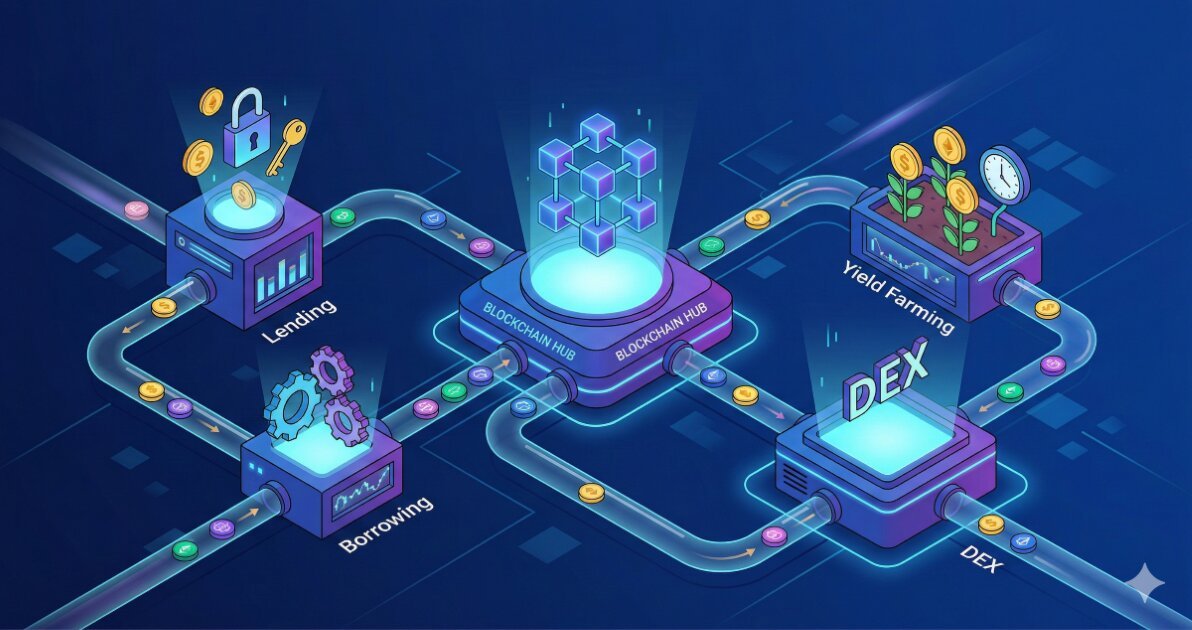
Crypto Regulations and Compliance: A Technical Framework for Operators and Developers

Crypto regulatory compliance is the intersection of protocol mechanics, entity classification, and jurisdiction-specific reporting obligations. Unlike traditional finance where entity type determines compliance scope, crypto introduces ambiguity: a smart contract may simultaneously function as a trading venue, custodian, and securities issuer depending on how regulators classify the token and the protocol’s control structure. This article covers the technical and operational levers that determine compliance obligations, common classification boundaries, and the data infrastructure needed to support defensible reporting.
Entity Classification and Protocol Architecture
Your compliance burden depends first on whether regulators view your protocol or service as a centralized intermediary or a software tool. This classification turns on specific architectural choices.
Centralized exchange or platform indicators: If your system maintains an order book offchain, holds user assets in pooled wallets you control, can halt user withdrawals, or sets trading fees unilaterally, regulators typically classify you as a money services business, securities exchange, or both. You inherit registration requirements, KYC obligations, transaction monitoring, and capital reserve rules.
Potentially exempt or lighter touch indicators: Protocols that operate exclusively onchain via immutable smart contracts, never custody user funds, use noncustodial wallet connections, and have no admin keys to pause or censor transactions may qualify for lighter treatment in some jurisdictions. Many protocols in this category still face securities law questions if their governance token or other assets meet investment contract tests.
The boundary is not binary. A protocol with a governance multisig that can upgrade contracts or change fee parameters occupies a middle zone. Some jurisdictions apply full intermediary rules to any system where humans retain discretionary control, even if exercised through onchain voting.
KYC and Transaction Monitoring Requirements
If your classification triggers anti-money laundering obligations, you need to collect and verify customer identity data before allowing transactions above specified thresholds. Implementation details matter.
KYC data collection: Most jurisdictions require at minimum full legal name, date of birth, residential address, and government ID verification. Some require source of funds documentation for deposits above a threshold (commonly 1,000 to 10,000 USD equivalent). The verification must happen before the user can trade or withdraw, not retroactively.
Ongoing monitoring: Regulated entities must screen transactions against sanctions lists (OFAC, UN, EU, depending on jurisdiction) in real time and flag patterns consistent with money laundering. This requires maintaining a transaction database that links blockchain addresses to verified identities, tracking deposit sources, and correlating withdrawal destinations.
Travel rule compliance: When sending crypto to another regulated entity, many jurisdictions require you to transmit originator and beneficiary information (name, address, account identifier). This applies to transfers above a threshold, typically 1,000 USD equivalent. The technical challenge is determining whether the receiving address belongs to a regulated entity and establishing a secure channel to exchange PII. Several protocols (TRP, TRUST, proprietary APIs) exist but adoption is fragmented.
Securities Law and Token Classification
Whether a token is a security determines registration, disclosure, and trading venue requirements. The analysis is jurisdiction specific, but common factors recur.
Investment contract tests: In the US, the Howey test asks whether buyers invest money in a common enterprise with expectation of profits from others’ efforts. Tokens sold in a fundraise where the team promises to build a protocol or ecosystem often meet this test. Tokens distributed via mining or liquidity provision without a central promoter may not.
Functional tokens vs governance tokens: A token used solely to pay transaction fees within a protocol (a consumptive use) is less likely to be deemed a security than a token that grants voting rights over protocol revenue or treasury assets. However, if the consumptive token’s value depends primarily on speculative trading rather than actual usage demand, regulators may still apply securities rules.
Secondary trading implications: If your token is a security, you must restrict secondary trading to registered exchanges or rely on exemptions. Most decentralized exchanges do not register as securities exchanges, creating compliance risk if your token trades there. Some projects use geographic IP blocks or mandatory attestations to limit US persons’ access, though these controls are easily circumvented and may not satisfy regulators.
Data Retention and Reporting Infrastructure
Compliance requires preserving specific transaction data and producing reports on regular or ad hoc schedules.
Transaction records: Regulated entities typically must retain records of each transaction including timestamp, counterparty identity, asset type, amount, fees, and blockchain transaction hash for five to seven years. For onchain protocols, this means linking wallet addresses to KYC records in a separate database, since the blockchain itself contains no identity data.
Suspicious activity reporting: If transaction monitoring flags potential money laundering or sanctions violations, you must file a report with the relevant financial intelligence unit within a specified timeframe (often 24 to 72 hours for urgent cases, 30 days otherwise). The report includes customer details, transaction patterns, and your analysis of why the activity is suspicious. Filing obligations often prohibit notifying the customer.
Periodic financial reporting: Entities holding customer assets must often report reserve balances, reconcile onchain holdings to customer liabilities, and in some cases undergo third party audits. If you operate a stablecoin, reserve reporting requirements may be monthly or even daily depending on jurisdiction.
Worked Example: DEX Interface with Fiat Onramp
Consider a decentralized exchange interface that allows users to connect wallets, swap tokens via an onchain AMM, and optionally purchase crypto with a credit card through an integrated third party payment processor.
The interface provider does not custody tokens during swaps. Users sign transactions from their own wallets, and the AMM smart contract executes directly. In this narrow function, the interface may avoid exchange registration in some jurisdictions since it never controls user assets.
However, the fiat onramp introduces different obligations. The payment processor converts fiat to crypto and sends it to the user’s wallet. The interface provider, by integrating this service and potentially receiving referral fees, may be deemed a money transmitter or payment facilitator. This triggers KYC requirements for fiat purchases, even if the subsequent swap activity remains permissionless.
The interface must now collect user identity data before processing credit card transactions, screen buyers against sanctions lists, monitor for structuring (e.g., repeated purchases just below reporting thresholds), and retain transaction records. If the interface geofences to exclude certain jurisdictions, it must verify user location reliably (IP checks are insufficient; document verification is stronger).
Common Mistakes and Misconfigurations
-
Assuming protocol immutability eliminates compliance obligations: Regulators often focus on who operates the interface or promotes the token, not just the smart contract’s technical properties. An immutable contract fronted by a commercial entity still creates compliance exposure for that entity.
-
Relying on VPN blocks or IP geofencing as definitive jurisdictional controls: These are trivially bypassed and may not satisfy regulators seeking to prove reasonable efforts to exclude prohibited users. Document based verification or wallet based attestations provide stronger defenses.
-
Collecting KYC data but failing to implement ongoing monitoring: Verification at onboarding satisfies only part of AML requirements. Without transaction surveillance, you cannot detect or report suspicious patterns as they develop.
-
Storing KYC data onchain or in decentralized storage: Personally identifiable information must remain confidential and deletable to comply with data protection laws (GDPR, CCPA). Immutable onchain storage conflicts with these requirements.
-
Treating stablecoin transfers as equivalent to fiat for compliance purposes: Many jurisdictions regulate stablecoins differently than bank deposits, and cross border stablecoin flows may trigger additional reporting or licensing requirements not present for domestic fiat.
-
Implementing travel rule compliance for all transfers regardless of amount or counterparty: Thresholds and exemptions vary. Overly broad implementation wastes resources; underly narrow implementation creates gaps.
What to Verify Before You Rely on This
- Current registration requirements for your entity type in each jurisdiction where you operate or have users. Licensing regimes change frequently.
- Specific KYC data fields and verification standards mandated by your jurisdictions. Some require biometric checks; others accept document uploads.
- Transaction monitoring thresholds and timeframes for suspicious activity reporting in your jurisdictions. These vary and updates occur.
- Whether tokens you list or support have received regulatory classification guidance or no action letters in relevant jurisdictions.
- Travel rule threshold amounts and whether your jurisdiction participates in international travel rule frameworks. Implementation standards are still evolving.
- Data residency and protection requirements for storing customer PII. Some jurisdictions prohibit offshoring this data.
- Reserve reporting frequency and audit requirements if you custody user assets or issue stablecoins.
- Current sanctions lists and screening database providers approved by regulators in your jurisdictions.
- Whether your protocol’s governance structure (multisig thresholds, upgrade mechanisms, fee changes) affects regulatory classification.
- Legal definitions of money transmission, exchange operation, and securities dealing in each jurisdiction, as these boundaries shift.
Next Steps
- Map your protocol’s architecture against centralized intermediary indicators to assess likely regulatory classification. Document which functions involve custody, control, or discretionary authority.
- Build or integrate transaction monitoring infrastructure that links blockchain addresses to identity records, flags sanctions matches, and detects suspicious patterns before launching customer facing services.
- Establish legal entity structures and obtain necessary licenses in your primary operating jurisdictions before processing transactions, recognizing that remediation after the fact is costlier and may be impossible in some cases.
Category: Crypto Regulations & Compliance
Related Stories
How to Evaluate Crypto Ratings and Reviews Without Getting Mislead

Crypto Derivatives: Futures and Options Mechanics for Active Traders